Running a hotel with spreadsheets, paper records and group chats may seem manageable at first. But as your operation grows, managing shifts, attendance and staff updates across departments can become increasingly difficult.
According to a 2025 survey by the American Hotel & Lodging Association (AHLA), 65% of surveyed hotels in the United States reported staffing shortages. While this is U.S. data, it highlights the workforce pressures hotels can face as operations become more demanding.
As Your Hotel Grows, Here Are Five Signs That Your Current Approach May No Longer Be Enough:
-
Managers Are Building Rotas from Scratch Every Week
If managers are spending hours checking availability, creating schedules and communicating changes, manual rota planning may be taking valuable time away from hotel operations.
A more structured scheduling process can make recurring shifts, availability and changes easier to manage.
-
Attendance Records Don’t Match What Happened
Paper sign in sheets and manually recorded hours can make it difficult to maintain an accurate picture of attendance.
When employees change shifts, work additional hours or arrive late, discrepancies can create extra administrative work and complicate payroll.
-
One Callout Creates a Staffing Scramble
When an employee calls in sick, does a manager have to start calling around to find cover?
For departments such as housekeeping, reception and food and beverage, an uncovered shift can quickly affect daily operations. A structured approach to open shifts and shift swaps can make finding cover easier.
-
Managers Don’t Have One Clear View of the Workforce
When rotas, attendance, leave and staff communication are managed in different places, managers have to piece together information to understand what is happening.
Having workforce information in one place can give managers greater visibility and make it easier to identify gaps and respond to changes.
-
Growth Is Making the Manual Process Worse, Not Better
Adding employees, departments or locations should increase your hotel’s capacity, not simply increase administrative work.
If every stage of growth creates another spreadsheet, message or manual process, it may be time to rethink how your workforce is managed.
What Changes When Workforce Management Is Connected?
Manual processes can work when hotel operations are small and straightforward. The challenge comes when volume, complexity and change make them harder to maintain.
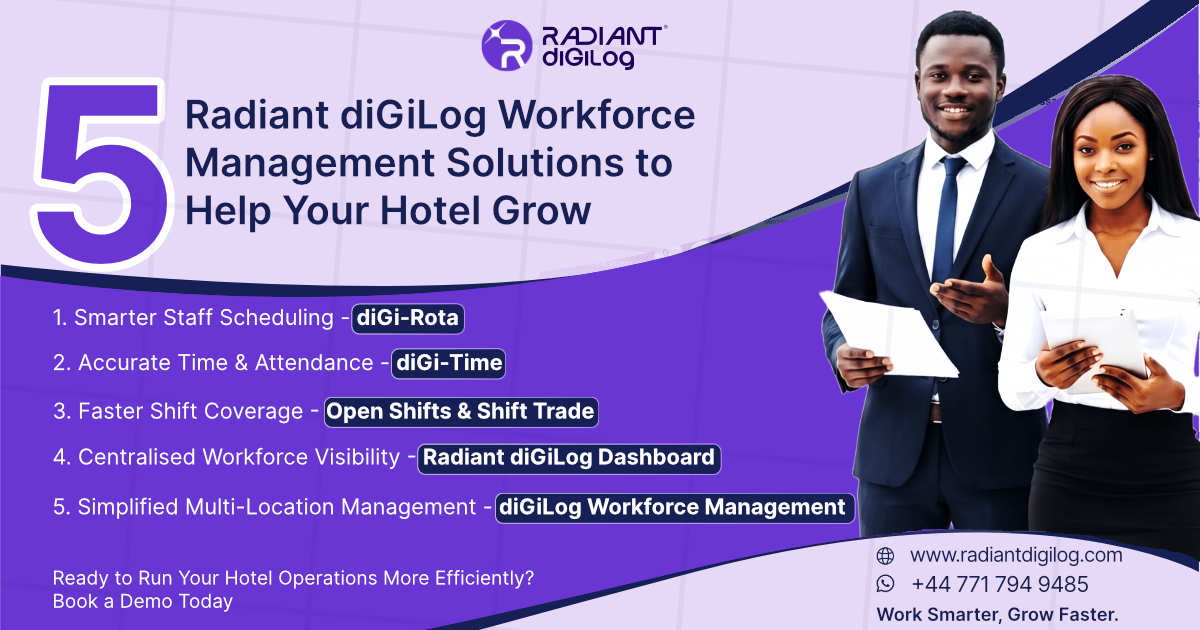
Radiant diGiLog connects key workforce processes, including scheduling, attendance, shift management and workforce visibility, in one platform.
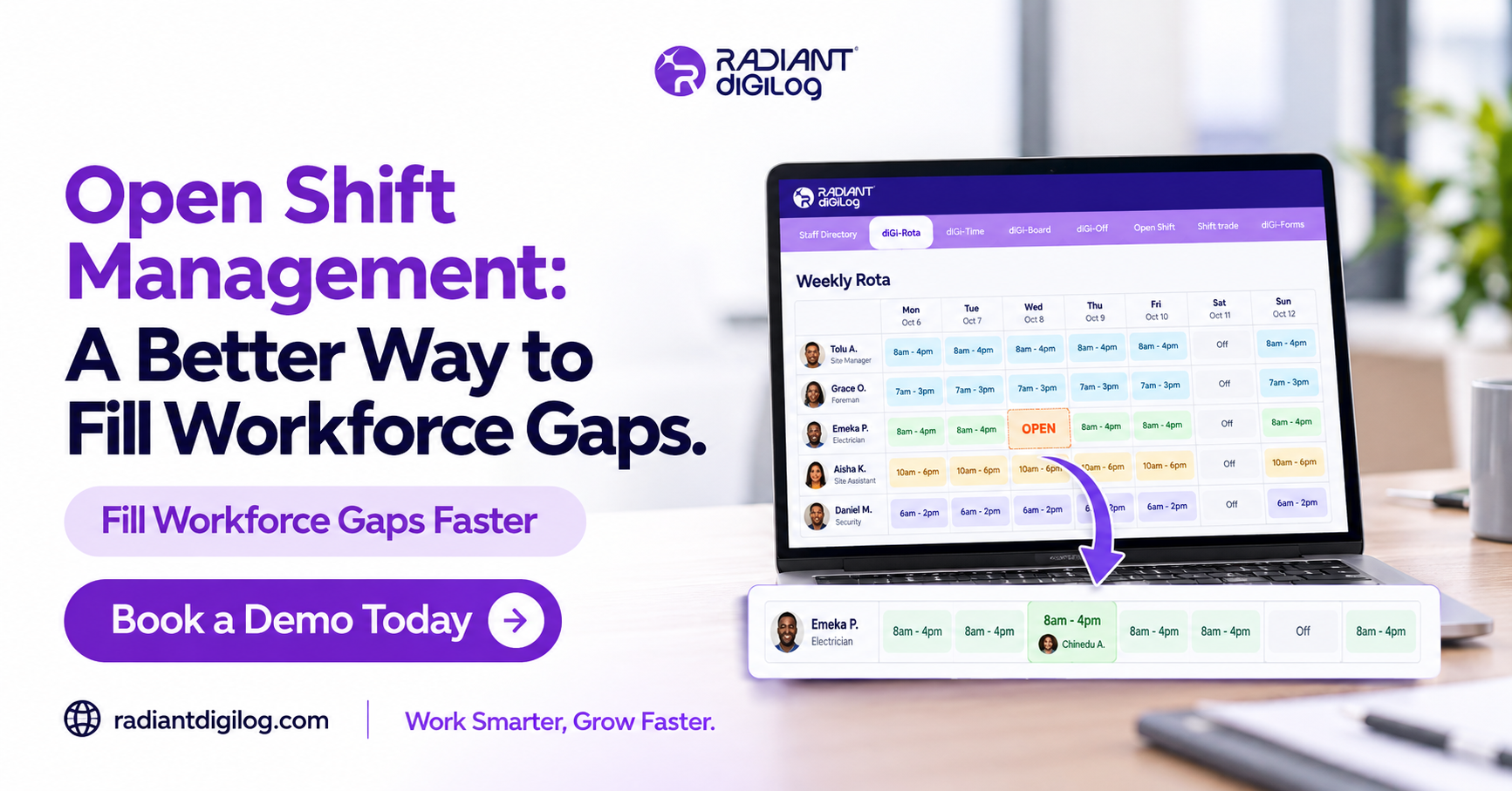
diGi ROTA supports smarter scheduling. diGi TIME provides more accurate attendance and working hour records. Open Shifts and Shift Swaps simplify finding cover, while the Radiant diGiLog Dashboard gives managers a central view of workforce activity.
Together, these tools help hotel managers spend less time coordinating administrative tasks and more time running their operations.
Manual Processes Shouldn’t Hold Your Hotel Back
If your managers are spending more time coordinating rotas, checking attendance and finding cover, it may be a sign that your hotel’s workforce management approach needs to evolve.
The right approach should support growth, not create more work because of it.
Explore Radiant diGiLog or book a demo to see how connected workforce management can support your hotel.